
Tu-95 Bear
Strategic bomberIn serviceFielded 1956Pending verification
Also known as: Tupolev Tu-95, Bear
Air ForcesRUS
Fact cardConfidence · Source
System
TypeStrategic bomber
Alternative designationsTupolev Tu-95, Bear
Date of introduction1956
ProliferationOrigin country only
Dimensions and weight
Flight performance
Protection
Armament and payload
ArmamentGryazev-Shipunov GSh-23; Kh-101 / Kh-102; AS-15 Kent (Also known as the Kh-55); Kh-65 missilesMed[1]
Fire control
Variants
Tu-95Basic variant of the long-range strategic bomber and the only model of the aircraft never fitted with a nose refuelling probe. Known to NATO as the Bear-A.[1]
Tu-95K22Conversions of the older Bear bombers, reconfigured to carry the Raduga Kh-22 missile and incorporating modern avionics. Known to NATO as the Bear-G.[1]
Tu-95K/Tu-95KDDesigned to carry the Kh-20 air-to-surface missile. The Tu-95KD aircraft were the first to be outfitted with nose probes. Known to NATO as the Bear-B.[1]
Tu-95KMModified and upgraded versions of the Tu-95K, most notable for their enhanced reconnaissance systems. These were in turn converted into the Bear-G configuration. Known to NATO as the Bear-C.[1]
Weapons and payload options · 4Confidence · Source
Gryazev-Shipunov GSh-2323mm Autocannon
Med[1]- Type
- 23mm Autocannon
- Caliber
- 23 mm
- Rate of fire
- 3,400–3,600 rounds/min (alleged)
Kh-101 / Kh-102Air-Launched Cruise Missile
Med[1]- Range
- 2,500–2,800 km1,553–1,740 mi · 1,350–1,512 nmi
- Quantity
- 10
- Type
- Air-Launched Cruise Missile
- Warhead
- HE, fragmentation, submunition (Kh-101), 250 kt nuclear (Kh-102)
- Length
- 7.45 m
AS-15 Kent (Also known as the Kh-55)Transonic air-launched Long-Range Cruise Missile
Med[1]- Range
- 2,500 km1,553 mi · 1,350 nmi
- Quantity
- 8
- Type
- Transonic air-launched Long-Range Cruise Missile
- Warhead
- 200 kt nuclear (information on warhead yield varies from Russian sources, which claim a 100 kt warhead, and Western sour
- Speed
- Mach 0.7
- Length
- 7.00 m
Kh-65 missilesTransonic air-launched Long-Range Cruise Missile
Med[1]- Quantity
- 14
- Type
- Transonic air-launched Long-Range Cruise Missile
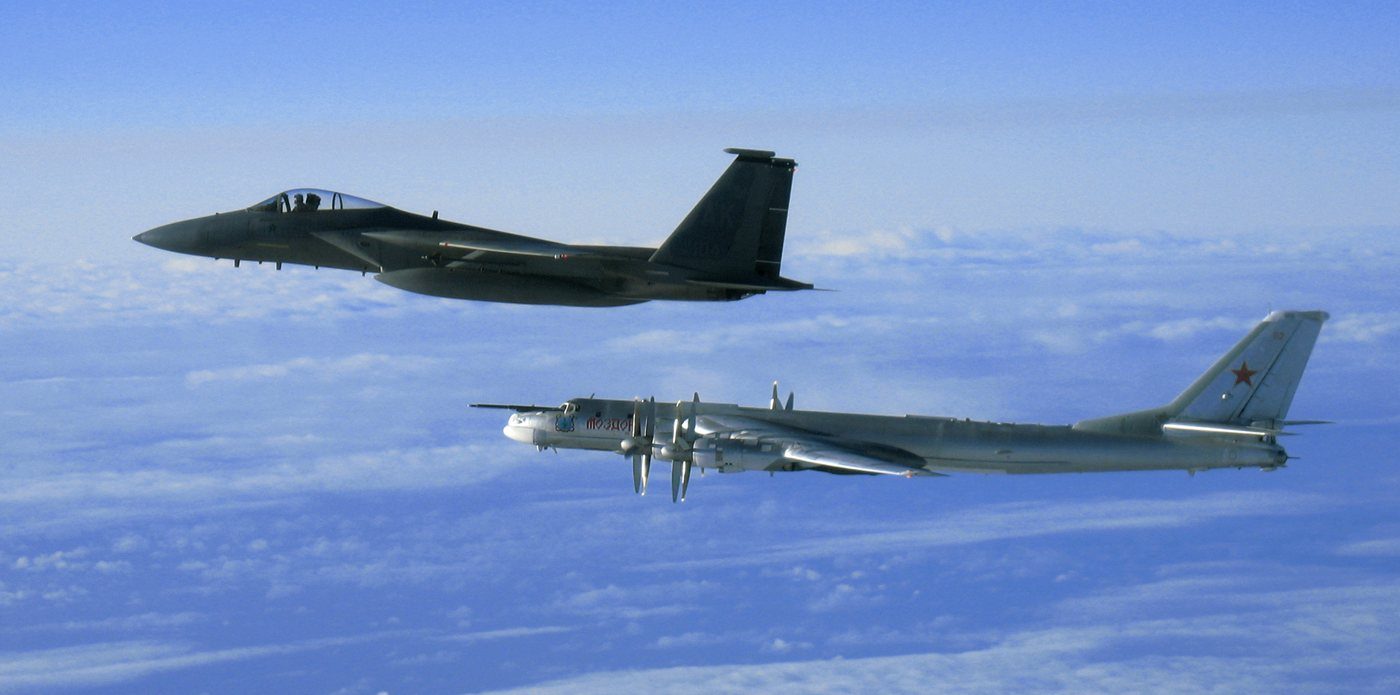
The Tupolev Tu-95 (Russian: Туполев Ту-95; NATO reporting name: "Bear") is a large, four-engine turboprop-powered strategic bomber and missile platform. First flown in 1952, the Tu-95 entered service with the Soviet Union in 1956 and is expected to serve the Russian Aerospace Forces until at least 2040.
Draft entry. Values come from the cited public sources and are awaiting editor verification.
- Tu-95 (Bear) Russian Strategic Bomber Aircraft, U.S. Army TRADOC G-2 Worldwide Equipment Guide (ODIN)
Published/updated 2026-03-20 · Tier 1 · checked 2026-10-10
- 2026-10-05 Entry created from the Worldwide Equipment Guide (ODIN)
- 2026-10-06 Added photo (Public domain)