
S-75 Dvina (SA-2 Guideline)
Strategic surface-to-air missile systemFielded 1957Pending verification
Also known as: Volga-75SM, V-75 Volkhov
Missile ForcesRUS
Fact cardConfidence · Source
System
TypeStrategic surface-to-air missile system
Alternative designationsVolga-75SM, V-75 Volkhov
Date of introduction1957
ProliferationAt least 22 countries
ManufacturerRaspletin KB-1 (head developer), Grushin MKB Fakel (missile developer), Lavochkin OKBMed[1]
GuidanceRadio command guidance from Fan Song A/B; or E/F-band missile control radar; or Fan Song D/E G-band missile control radar Many installations have Spoon Rest early warning radar.Med[1]
Dimensions and weight
Fire control
Fire control / radarSpoon Rest; Spoon Rest is a Russian ground-based, early warning radar that later evolved into the Knife Rest** series.; P-15 Flat Face; 2D UHF radar developed and operated by the former Soviet Union; PRV-11 Side Net; Side Net is a ground-based height-finding radar used in a ground control intercept (GCI) mode with earlMed[1]
Variants
SA-2A (Guideline Mod 0)This was the initial variant of the SA-2, which was deployed around Moscow, Leningrad and in the Baku region. It was guided by the Fan Song A radar system. It was probably a pre-production version.[1]
SA-2B (Guideline Mod 1)This improved version replaced the Mod 0. It is slightly longer than the Guideline Mod 0 and is guided by the Fan Song B radar system.[1]
SA-2C (Guideline Mod 2)Developed at the same time as the Guideline-B, this variant is equipped with a modified Fan Song C/D G-band engagement radar. The missile itself has a longer engagement range and can attack targets that are at lower altitudes than earlier versions of the SA-2.[1]
SA-2D (Guideline Mod 3)This short-lived variant fired V-750AK missiles and operated with the Fan Song E radar. It was more capable of defeating targets in hostile electronic warfare environments. It was eventually superseded in Soviet service by the Guideline Mod 4.[1]
SA-2E (Guideline Mod 4)This variant, also known as the S-75M Volga, used the V-755 missile, which was characterized by a swelled warhead section that could be fitted with a 25 kT nuclear warhead. It was guided by the Fan Song F radar.[1]
SA-2F (Guideline Mod 5)This variant, also designated the S-75M3 Volkhov, was developed with some technology derived from the SA-3 Goa ** (see separate record). It utilizes the improved Fan Song E radar, which is much more capable of hitting targets in a heavy ECM environment.[1]
S-75 Volga 2AThis version was developed in 1995. Twelve digital assemblies replaced 78 analog assemblies. It fired an upgraded V-755 missile and used a modernized Fan Song F radar. It was primarily intended for export.[1]
S-75 Volga 2TBelarusian firm Tetraedr in 2004 began offering the S-75 Volga 2T upgrade kit. This included digital electronics and enhanced radars, launch control and missiles.[1]
Weapons and payload options · 2Confidence · Source
Rail GuidedArmament
Med[1]Either the V-750 or V-750V missiles.Standard
Med[1]- Range
- 30 km19 mi · 16 nmi
- Type
- Standard
- Guidance
- Command
- Warhead
- HE 200kg (295kg SA-2E) 188kg (HQ-2B/F/J/P), possible nuclear
- Warhead weight
- 190 kg
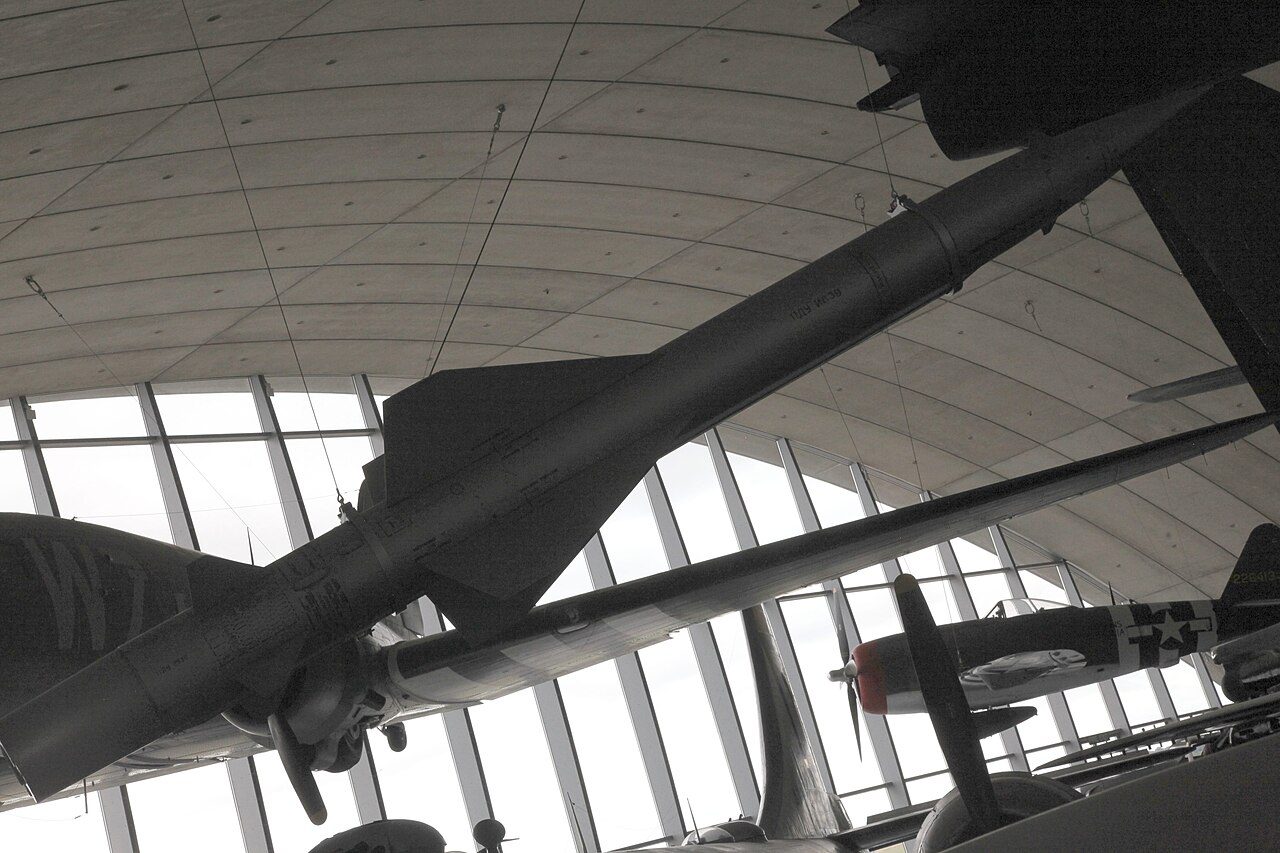
The S-75 (Russian: С-75; NATO reporting name SA-2 Guideline) is a Soviet-designed, high-altitude air defense system, built around a surface-to-air missile with command guidance. Following its first deployment in 1957 it became one of the most widely deployed air defense systems in history.
Draft entry. Values come from the cited public sources and are awaiting editor verification.
- S-75 Dvina (SA-2 Guideline) Russian Strategic Surface-to-Air Missile System, U.S. Army TRADOC G-2 Worldwide Equipment Guide (ODIN)
Published/updated 2026-03-20 · Tier 1 · checked 2026-10-10
- 2026-10-10 Entry created from the Worldwide Equipment Guide (ODIN), bulk import
- 2026-10-10 Added photo (CC BY-SA 3.0 fr)