
BMD-1
Airborne amphibious infantry fighting vehicleFielded 1969Pending verification
Land ForcesRUS
Fact cardConfidence · Source
System
TypeAirborne amphibious infantry fighting vehicle
Date of introduction1969
ProliferationAt least 14 countries
Dimensions and weight
Automotive performance
ChassisS-120 and based on the aluminium hull of the BTR-D airborne multi-purpose tracked armoured personnel carrierMed[1]
Protection
Hull ArmorIt is thought to be capable of stopping 12.7 mm rounds fired at the front of the vehicle from a range of 200 m. The sides are likely to provide protection from 7.62 mm rounds fired at typical combat ranges. 15 mm at 50° lower hull front, 10Med[1]
Turret Armor23 mm at 42° turret front; 19 mm at 36° turret side; 13 mm at 30° turret rear ; 6 mm turret topMed[1]
Armament
Secondary armament1 x PKT (Kalashnikov's Machine Gun) 7.62mm General-Purpose Machine Gun; The PKT can be controlled remotelyMed[1]
Fire control
Thermal Sight GunnerYes, dual-mode 1PN22M1 monocular periscopic sight mounted on the left side of the turret roof.Med[1]
Variants
BMD-1K(K stands for komandirskaya – command) – Command variant fitted with R-126 and R-107 transceivers, two Clothes Rail antennas and a generator box. It's sometimes called BMD-K.[1]
BMD-1PBMD-1 modernization with its 9S428 ATGM launcher replaced by pintle-mounted 9P135M-1 ATGM launcher capable of firing 9M113 "Konkurs" (AT-5 Spandrel), 9M113M "Konkurs-M" (AT-5B Spandrel B), 9M111 "Fagot" (AT-4 Spigot) and[1]
2S9 NONA Russian 120mm Self-Propelled MoThe 120 mm SO-120 2S9 Anona (Anemone) self-propelled gun/mortar (SPG/M) was first seen in public in May 1985 and is an airborne artillery assault vehicle that was developed to carry out two tactical functions.[1]
2S9-1MThe 2S9-1M is an upgraded variant of the baseline SO-120 2S9 Anona-S. The upgraded vehicle is designed to maintain the battlefield viability of the original SO-120 until a replacement - likely to be the Lotus fire suppor[1]
Weapons and payload options · 2Confidence · Source
OG-15V HE-Frag73 mm ammunition
Med[1]- Quantity
- 16 Total OG-15V HE-Frag Projectiles
- Muzzle velocity
- 290 m/s
PG-15V (HEAT)73 mm ammunition
Med[1]- Quantity
- 24 Total PG-15V Projectiles
- Muzzle velocity
- 400 m/s
- Armor penetration
- 280-350 mm
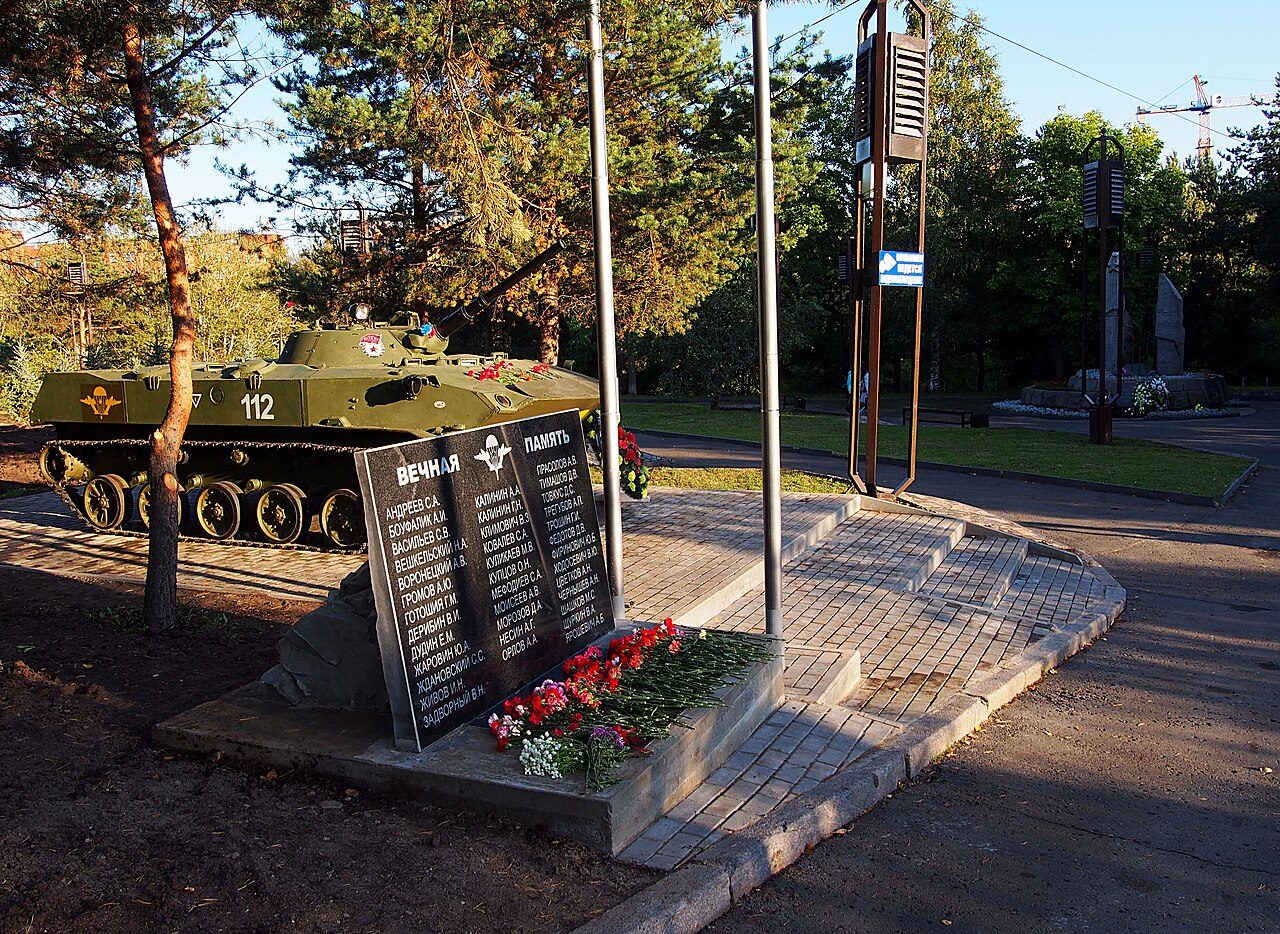
The BMD-1 is an airborne infantry-tracked armored vehicle, which entered the service of the Russian army airborne units in 1969 and was first shown to the public during a parade held in Moscow in November 1973. The vehicle was called the M1970 before its Russian designation became known.
Draft entry. Values come from the cited public sources and are awaiting editor verification.
- BMD-1 Russian Airborne Amphibious Infantry Fighting Vehicle (IFV), U.S. Army TRADOC G-2 Worldwide Equipment Guide (ODIN)
Published/updated 2026-03-20 · Tier 1 · checked 2026-10-10
- 2026-10-10 Entry created from the Worldwide Equipment Guide (ODIN), bulk import
- 2026-10-10 Added photo (CC0)